The Perpetual Soup: America, Germany, and Operational Doctrine Formation After the Vietnam War, 1973-1991
De Gruyter Brill (Winter 2026)
The 1973 Yom Kippur War heralded a significant change in military technology in the last two decades of the Cold War. Across Europe and the United States, members of the western alliance worried that they had lost the qualitative edge versus the Soviet Army. Their response was to initate a period of technological and intellectual transformation which lasted for decades and stretched across national border. This book analyzes the complicated military relationship between the US Army and an important European ally. It argues that during this period of intense reform, the US Army and the West German Bundeswehr used both new and preexisting institutions to engage in a period of intense, sympathetic, and mutually inspired reforms which developed significant new concepts in land warfare. This period of cooperation helped to reaffirm a special relationship between the US and West Germany, which transformed to become the most significant within NATO and Western Europe. The focus of this book is on the mechanics of the transatlantic exchange and how this shaped both forces through the last decades of the Cold War.
Battle in a Time of Transition
The Perpetual Soup’s second major contribution is to recenter the US-German relationship in this narrative of technological and doctrinal change. This relationship was far more important than previous histories have suggested, yet has remained largely unexamined. DePuy’s relationship with his West German counterparts was, however, an important pillar of the work he, TRADOC, and Donn Starry did in the 1970s. This relationship further helps to explain the stability and continuity between military doctrines from 1976 to 1982. Indeed, by 1982 the US and West Germany had accomplished a level of standardization between the two forces which was unprecedented in the history of NATO. This was not just true in terms of doctrine and ideas, but with technology and equipment as well. Indeed over the 1980s most NATO members consolidated on the German model and, at least tacitly, accepted the Amero-German model. I argue that the story of the Revolution in Military Affairs is a story of transnational collaboration and the success of alliance politics and dynamics in procurement. This was not an accident, The Perpetual Soup starts with perhaps the greatest failure of international defense procurement in American history. The late-Cold War standardization push was rather the result of a concerted effort by American and German officers to shape between themselves a new context, to together craft solutions to the Yom Kippur problem, and then to share them with partners across Europe and, as we see with the South Korean Army, around the world.
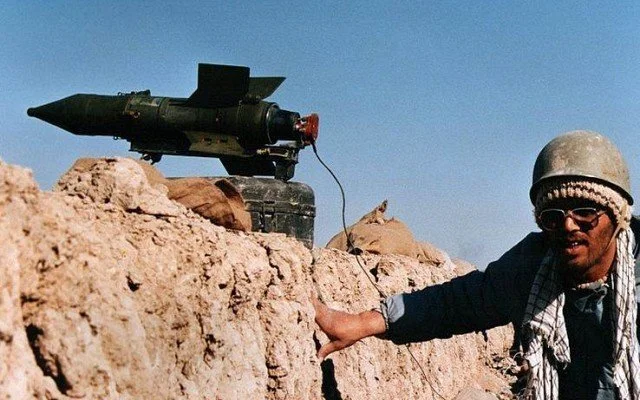
In 1973, Egypt, Syria, and Israel once again came to blows, this time over control of the Sinai and Golan border regions. The Arab armies, first on the offensive, brought with them new weapons of Soviet designs such as the T-62 tank and the AT-3 ATGM. The Israeli army struggled to recreate the dizzying success it had found in 1967. In a morning, October 8th, the western way of war ran into a wall of missiles, rockets, and steel and was destroyed. Technology seemed to totally upend the apple cart, and forced planners in Israel and beyond to contend with the new realities that technology had imposed in the deserts of the Middle East. Out of this milieu arose, as if on half shell, the Revolution in Military Affairs and techno-centric warfare.
The Perpetual Soup picks up this narrative and explores the dynamics which produced a new vision for the late Cold War battlefield. In this task, The Perpetual Soup makes several new contributions. First and foremost it recontextualizes Active Defense and the 1976 edition of FM 100-5. Unlike other histories, I argue that William DePuy’s ideas were far more important and influential. The more famous 1982 edition of the same manual, which produced the legendary AirLand Battle doctrine, was not a rejection of 1970s thinking, but an extension in lockstep with these ideas. Beyond this, The Perpetual Soup extends the narrative past 1982 to examine the impact of later-decade developments on AirLand Battle which never rose to the same level of named doctrine, but nevertheless made important changes in these fundamental ideas. The narrative concludes with a discussion of AirLand Battle 2000, a proposed 1990s era revision to AirLand Battle which would have updated the doctrine for a new drone age.